ProgramsBangladesh Hypertension Control Initiative
Hypertension control, built into primary care.
A national partnership to strengthen hypertension management at primary care — scaling evidence-based protocols, team-based care, and digital health systems across Bangladesh to reduce cardiovascular disease burden.
Run by NHFB with NCDC and DGHS, with technical support from Resolve to Save Lives, since 2018.
- 47
- Districtsnationwide coverage
- 328
- Facilitieshealth complexes enrolled
- 74.2M
- Adultsestimated target population
- 24.6%
- Prevalencehypertension among adults 18+
ResultMarch 2026
58%
of registered patients under care have their blood pressure controlled during the most recent visit.
Nationally, about 14% of people with hypertension have it under control.
01About the program
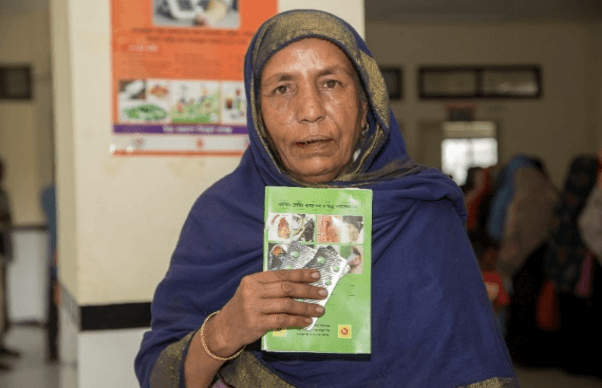
Tackling the silent killer where people already go for care
High blood pressure is a major risk factor for cardiovascular disease. 24.6% of adults aged 18+ in Bangladesh have hypertension — yet only about 14% of these patients have their blood pressure under control.
A multisectoral action plan adopted by the Government of Bangladesh aims to reduce the prevalence of raised blood pressure by 25% by 2025 following WHO global targets. NHFB has been working with NCDC, DGHS, and Resolve to Save Lives (RTSl) since 2018 to implement a scalable model of hypertension control at Upazila Health Complexes and Community Clinics.
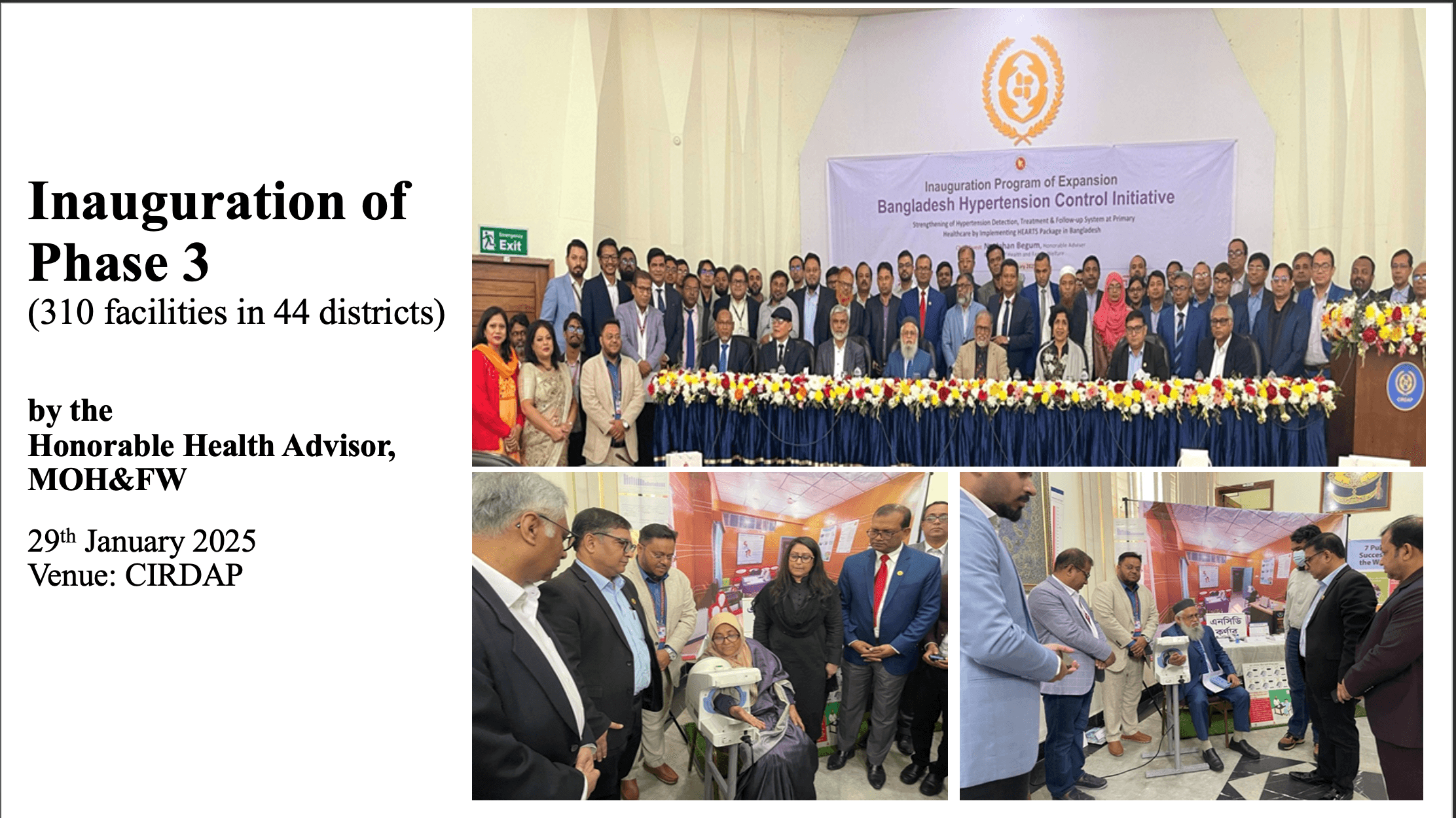
After a successful pilot in Sylhet in 2018, the program scaled to 54 facilities in 6 districts in 2021, expanded to 182 facilities in 23 districts in 2022, and by January 2025 reached 310 facilities in 44 districts across Bangladesh.
“Implementation of a model for hypertension control at primary health care level is an important agenda of the Non-Communicable Disease Control Program (NCDC), Directorate General of Health Services (DGHS).”
NCDC, Directorate General of Health Services
02Scale-up
From four upazilas to a national program
Each phase was evaluated before the next expansion, so the model that reached 47 districts is the one that worked in the pilot.
2018
Pilot Launch
4 Upazilas of Sylhet — Beanibazer, Bishwanath, Golapganj, Fenchuganj
2021
Phase 1 Expansion
54 facilities across 6 districts
2022
Phase 2 Scale-up
182 facilities across 23 districts
Jan 2025
National Scale
310 facilities across 44 districts of Bangladesh
03Where BHCI works
47 districts in every division
BHCI has grown from a four-upazila pilot in Sylhet in 2018 to 328 facilities in 47 districts by March 2026. Sylhet division, where the program began, is marked separately on the map.
| Division | Districts |
|---|---|
| Dhaka | 9 |
| Chattogram | 9 |
| Rajshahi | 8 |
| Barishal | 6 |
| Khulna | 6 |
| SylhetPilot, 2018 | 4 |
| Mymensingh | 4 |
| Rangpur | 1 |
| Total | 47 |
04WHO HEARTS
Six components, and how each one is delivered in Bangladesh
HEARTS is the World Health Organization's technical package for cardiovascular disease management in primary care. BHCI follows it letter by letter.
- H
Healthy-lifestyle counselling
WHO recommendsInformation on four behavioural risk factors for cardiovascular disease, with brief interventions as an approach to counselling and encouraging healthy lifestyles.
BHCI doesBHCI develops information, education and communication materials with clear health messages. Medical officers and senior staff nurses spend dedicated time counselling patients on lifestyle change at every visit.
- E
Evidence-based treatment protocols
WHO recommendsA collection of protocols standardising the clinical approach to managing hypertension and diabetes.
BHCI doesBHCI co-developed the national hypertension treatment protocol adopted by NCDC and DGHS. Facility staff are sensitised to follow it through training, quality-improvement cycles and advocacy meetings.
- A
Access to essential medicines and technology
WHO recommendsGuidance on medicine and technology procurement, quantification, distribution and facility-level handling of supplies.
BHCI doesMedicine transfer between divisions, districts and facilities is now possible. Facilities procure NCD medicines through the Medical and Surgical Requisite fund, with systematic refilling at community clinics.
- R
Risk-based CVD management
WHO recommendsA total-risk approach to assessing and managing cardiovascular disease, including country-specific risk charts.
BHCI doesStroke and heart attack are prevented through proper blood-pressure screening and diagnosis. Every enrolled patient receives a structured risk assessment and targeted follow-up.
- T
Team-based care
WHO recommendsGuidance and examples on team-based care and task-sharing, with training materials.
BHCI doesAn NCD corner roster at every upazila health complex with two dedicated nurses and one NCD doctor. Community clinic staff handle routine medicine refills so clinicians can focus on clinical decisions.
- S
Systems for monitoring
WHO recommendsHow to monitor and report on CVD prevention and management, with standardised indicators and data-collection tools.
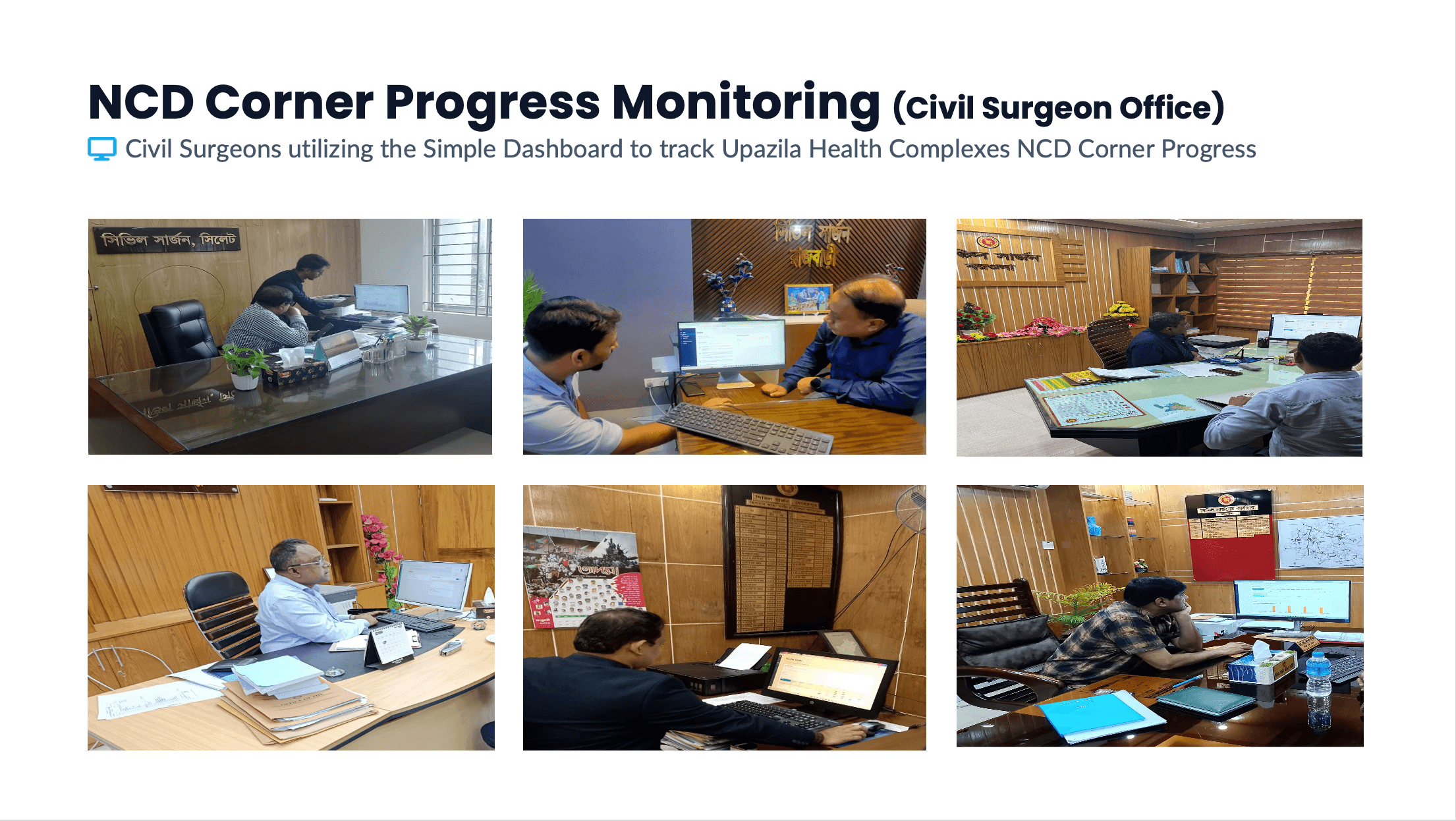
BHCI doesNCD staff are trained on the Simple app. Civil surgeons track district performance on the Simple dashboard, and upazila health officers use the app for facility-level review.
05Intervention strategies
Five things every enrolled facility gets
01
Protocols
Standardized, evidence-based treatment protocols aligned with the WHO HEARTS technical package. Step-by-step clinical guidelines for hypertension diagnosis, treatment initiation, and follow-up at the Upazila Health Complex and Community Clinic level.
02
Team Based Care & Task Sharing
Multi-disciplinary health teams with optimized task distribution — community health workers, nurses, and physicians collaborating for efficient patient management, improved reach, and sustainable coverage at the primary care level.
03
Medication Supply
Ensuring an uninterrupted supply of essential antihypertensive medicines at all enrolled facilities. Systematic procurement, forecasting, and distribution mechanisms eliminate stock-outs and support long-term treatment adherence.
04
Patient Centered Care
Patient education, counselling, and support for lifestyle modifications. Regular follow-up systems, appointment reminders, and adherence coaching to achieve sustained blood pressure control and prevent cardiovascular complications.
05
Information Systems
Digital health management through the HEAL-BD platform for real-time patient tracking, clinical outcome monitoring, and program performance dashboards — enabling data-informed decisions at facility, district, and national levels.
06Digital tools
A patient record that fits in a ten-second visit
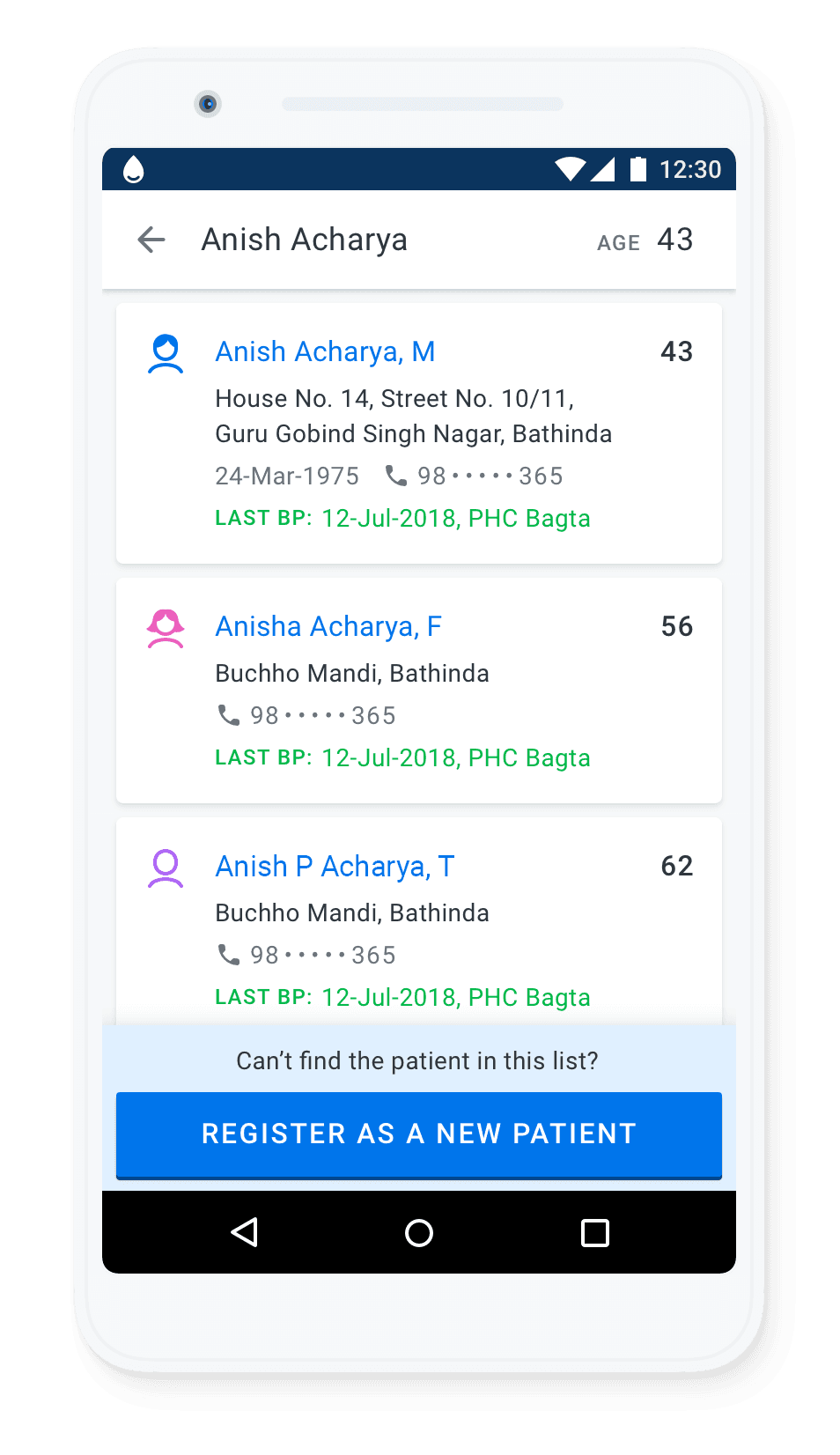
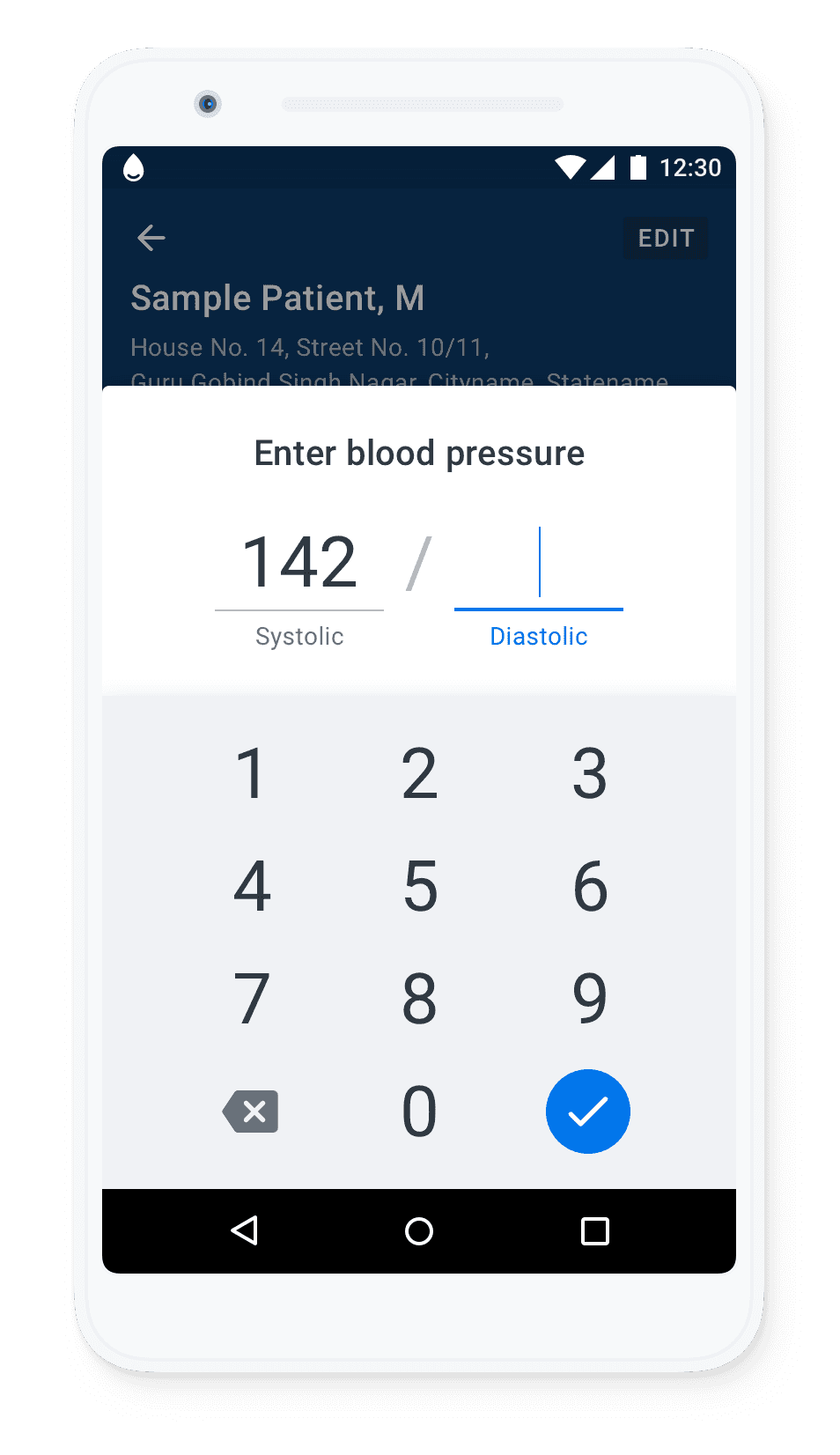
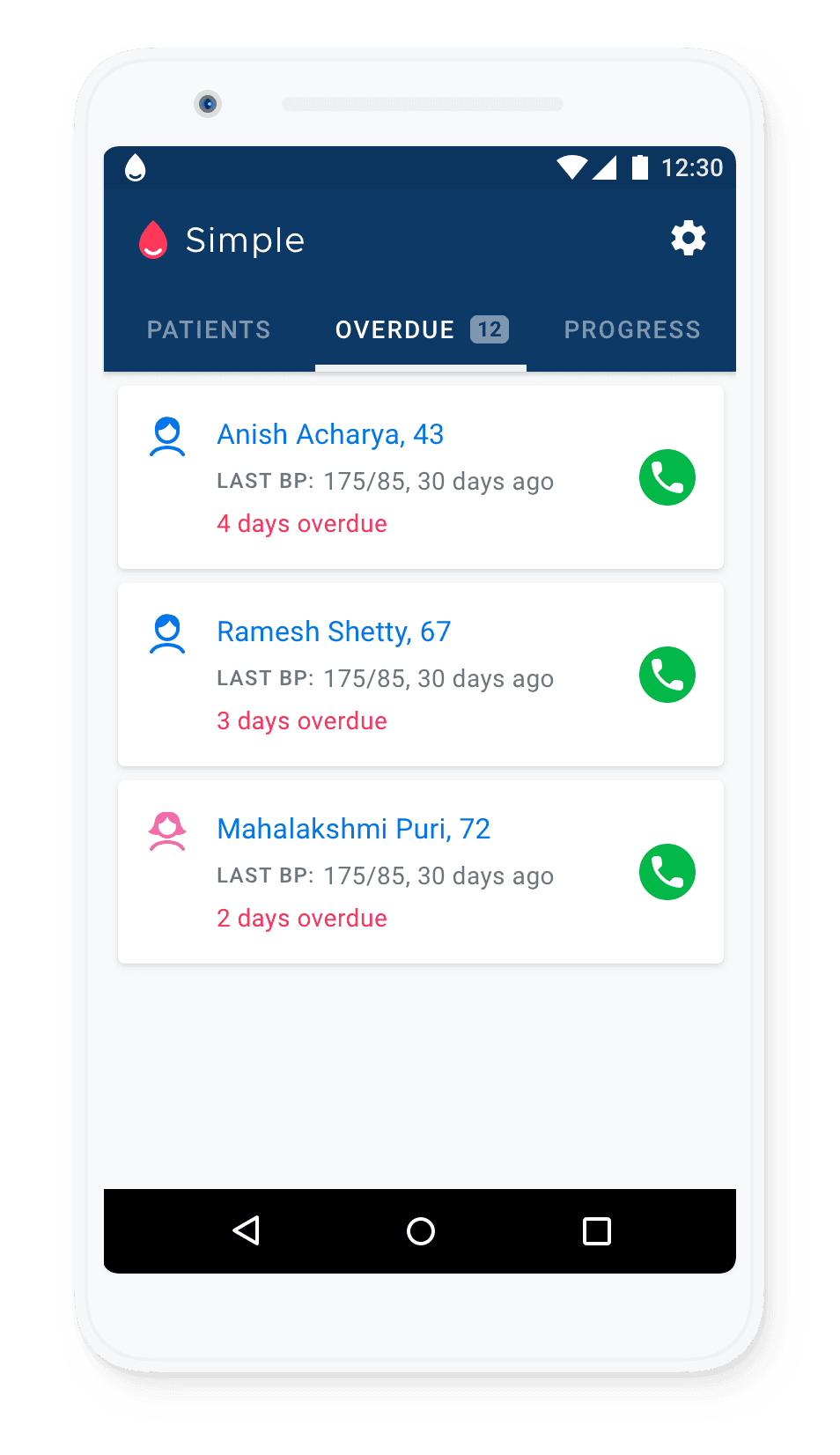
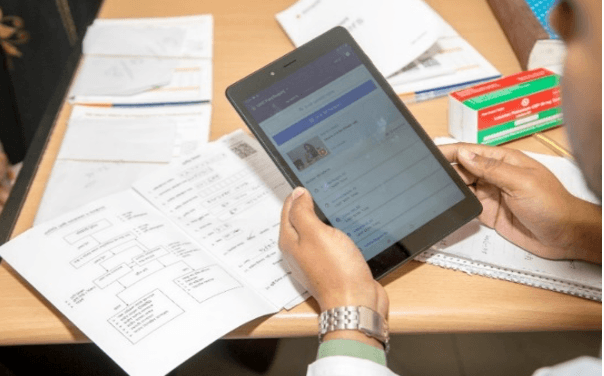
BHCI uses Simple, a free, open-source app built by Resolve to Save Lives for hypertension and diabetes care in busy primary-care settings. Nurses and medical officers are its main users.
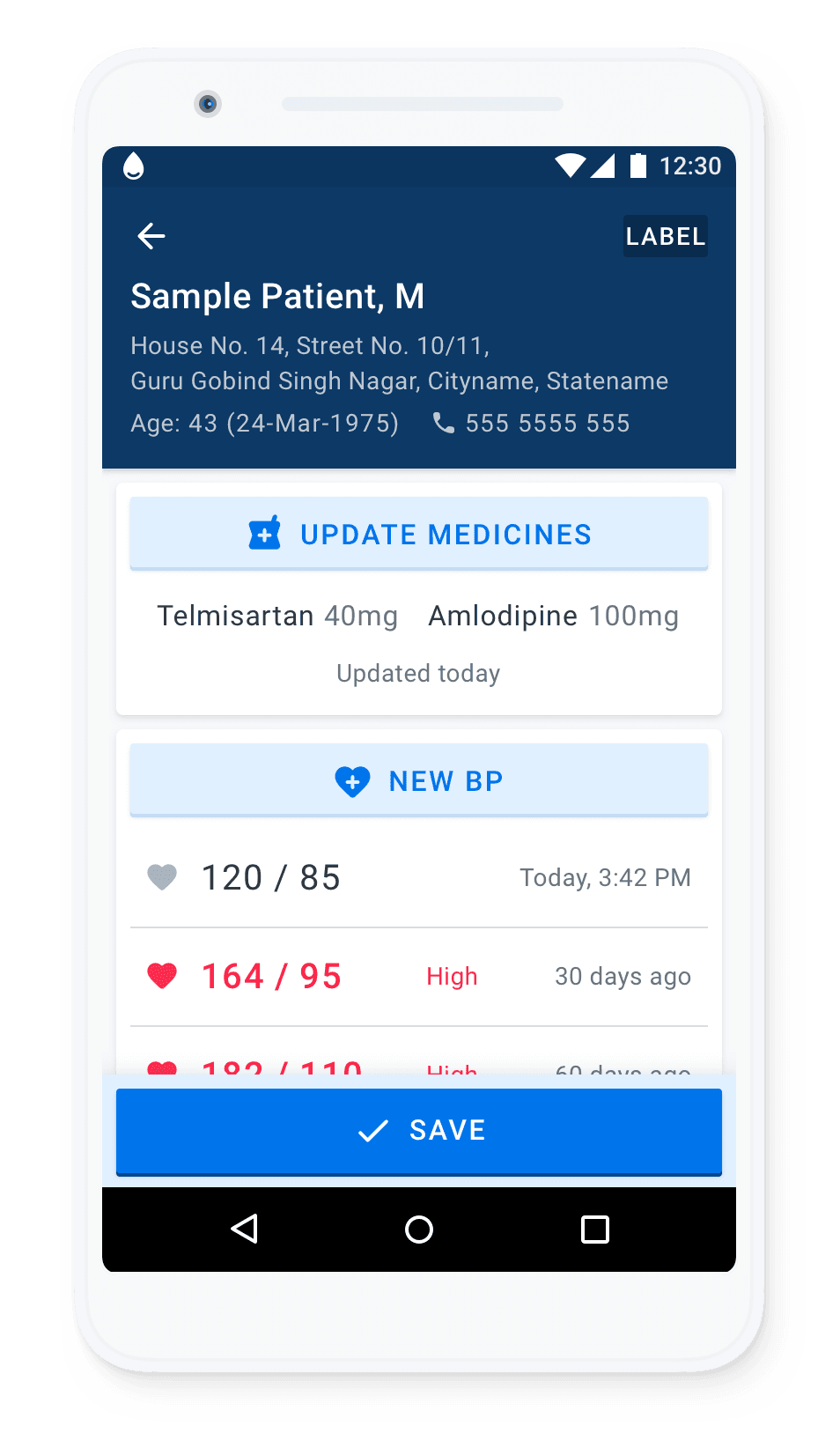
What the app does at an NCD corner
- Patient registration
- Quick digital registration of hypertension and diabetes patients, with a unique ID that follows them across visits and facilities.
- Blood pressure and blood sugar recording
- Readings are logged at every visit in a few seconds, and high-risk readings are flagged for immediate clinical action.
- Follow-up scheduling
- Appointments are scheduled automatically and health workers receive a daily list of patients who are overdue.
- Medication tracking
- Prescribed antihypertensive medicines are recorded at each visit, which also supports medicine forecasting.
- Civil surgeon dashboard
- District civil surgeons monitor facility performance, control rates and patient outcomes across enrolled facilities.
- Upazila-level monitoring
- Upazila health and family planning officers review NCD corner performance and staff compliance in the app.
From the facility to national reporting
Every reading entered in the app is available the same day to the civil surgeon's dashboard. Aggregated numbers are pushed quarterly into DHIS2, Bangladesh's national health reporting platform, and into HEAL-BD, the national digital platform for NCD management.
Simple was first launched by the India Hypertension Control Initiative in 2018 and is now used in Bangladesh, Ethiopia and Sri Lanka. As of January 2026 it has been used in 5,387 public health facilities to manage 4.4 million patients.
07Results and recognition
What the numbers show
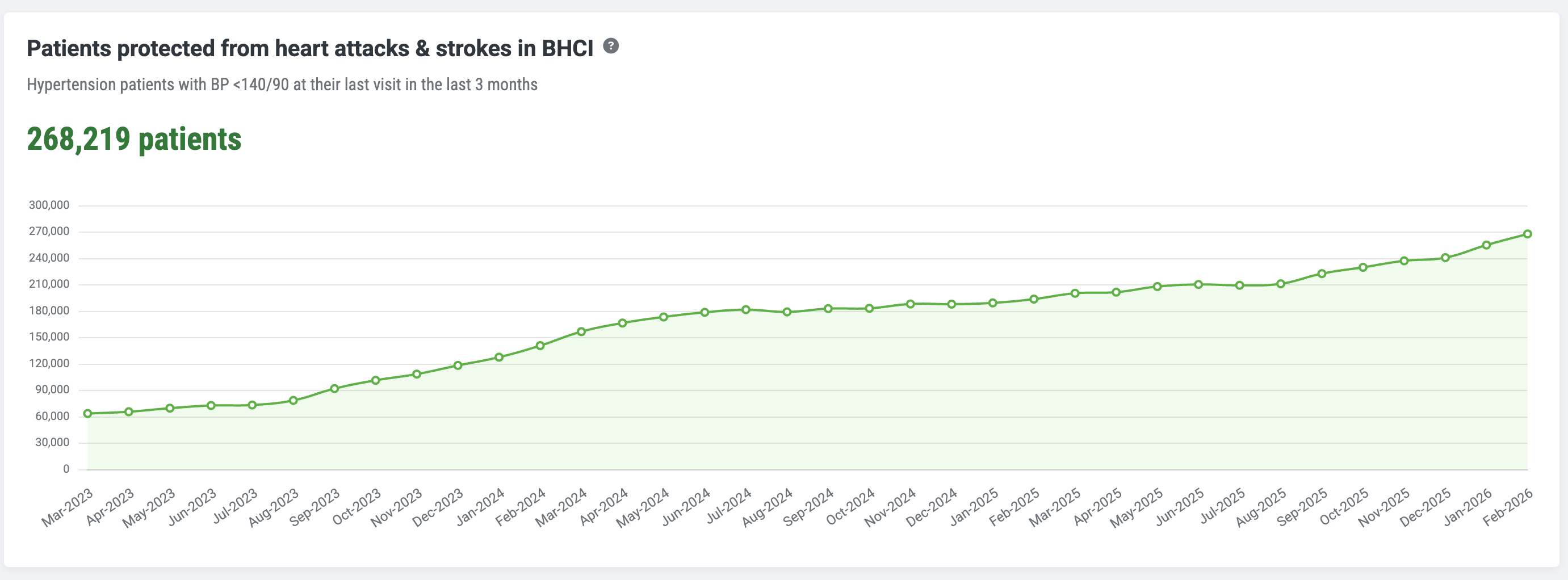
Patients protectedMarch 2026
268,219
Hypertension patients with blood pressure below 140/90 at their last visit in the past three months.
Health workers trainedMarch 2026
11,614
The Simple app has been introduced in 327 upazila health complexes, 5 district hospitals and 325 community clinics across three districts.
| Role | Trained on the Simple app |
|---|---|
| Doctors | 1,501 |
| Nurses | 1,576 |
| SACMOs | 622 |
| Health inspectors | 768 |
| Health assistants | 1,859 |
| CHCPs | 4,829 |
| Storekeepers | 459 |
WHO Global reportSeptember 2025
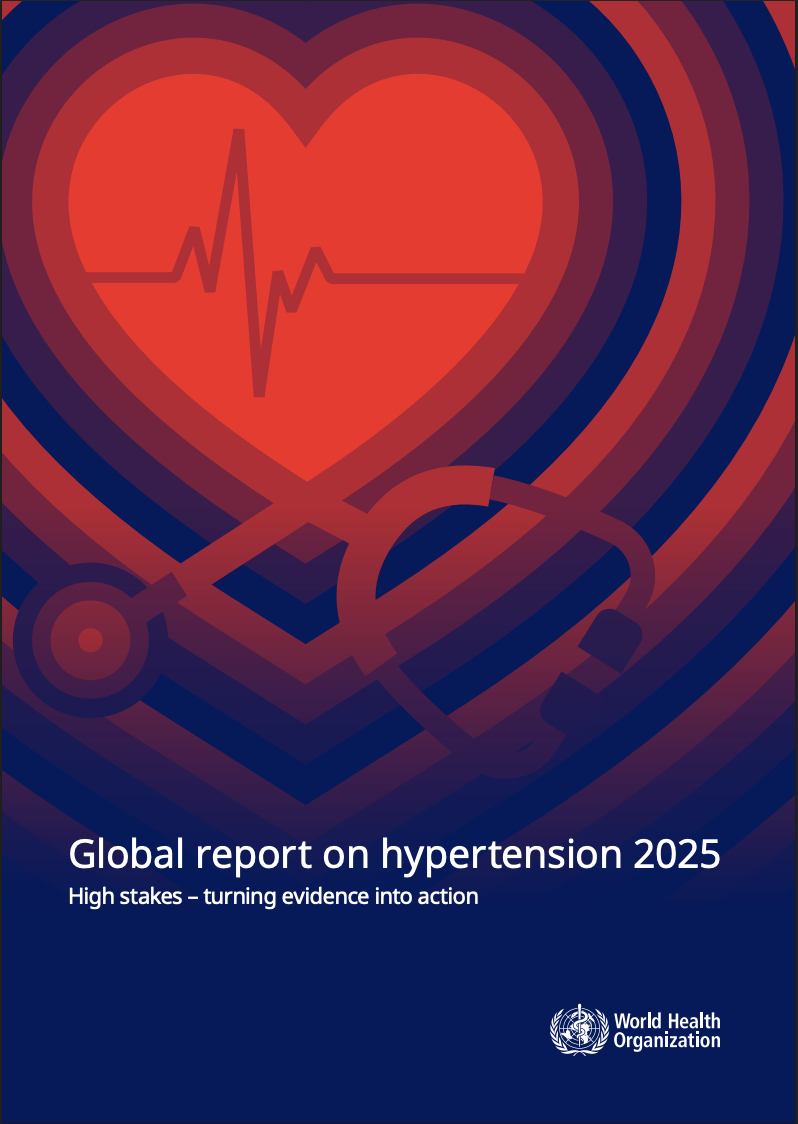
Global report on hypertension 2025: high stakes, turning evidence into action
The second WHO global report on hypertension calls for detection, treatment and control to be scaled up at the primary-care level. Bangladesh's primary-care model is among the national programs the report tracks, and the control rate at BHCI facilities is well above the global average.
08Milestones
Two moments from the program
09Partners
A government program with a technical partner
BHCI operates under the National NCD Action Plan of the Government of Bangladesh. NCDC coordinates it within DGHS, NHFB provides technical expertise, and Resolve to Save Lives provides global program support and quality improvement.

NCDCNon-Communicable Disease Control Programme

DGHSDirectorate General of Health Services

MOH&FWMinistry of Health and Family Welfare

NHFBNational Heart Foundation of Bangladesh

RTSLResolve to Save Lives
10Work with us
Help take hypertension control to the districts still waiting.
For technical collaboration, data sharing or capacity building, write to the department. We work with government agencies, development partners and funders who want to see blood pressure controlled at scale.