
ProgramsClean Air, Healthy Future Hearts
Teaching Savar's students to see the air they breathe.
A World Heart Federation-funded project to raise awareness among school students of air pollution and its health risks, in one of the most polluted areas of Dhaka. It promoted protective behaviour, engaged scouts and girl guides as peer educators, ran a social media campaign, and put updated evidence in front of policymakers.
Implemented by the Department of Epidemiology and Research, August 2024 to July 2025, with support from the World Heart Federation, Geneva.
- 5
- Schools in Savar
- 400
- Students in the campaign sessions, about 80 per school
- 100+
- Scout and girl guide volunteers oriented as peer educators
- 2024–25
- Project period, August to July
01Why children, why Savar
The lungs that are still growing
Air pollution is a major public health concern across South Asia, where a large share of the population breathes harmful levels of fine particulate matter, ozone and nitrogen dioxide. Children are especially vulnerable: their hearts and lungs are still developing, so they are more susceptible to inflammation and to lasting damage. Exposure early in life raises the risk of cardiovascular disease, hypertension, obesity, asthma and metabolic disorders later on.
In Bangladesh, PM2.5 concentrations far exceed World Health Organization guidelines and air pollution contributes substantially to deaths among children and adults alike. Savar, an industrial area on the edge of Dhaka, is among the most polluted places in the city.
The project set out to make the problem visible to the people who will live with it longest. If students understand what is in the air, how it affects them and what they can do about it, they can protect themselves and carry the message home.
02What we did
From a desk review to five school campaigns
The project had four aims: educate students about the hazards of air pollution, mobilise scouts and girl guides to spread the message, run a social media campaign, and sensitise policymakers with current evidence.
01
Prepare the materials
A desk review of Bangladesh and South Asian evidence and policy, then information and education materials for schools, Facebook templates and a presentation. The team also dubbed a Bangla voice-over onto the World Heart Federation's air pollution video so students could follow it.
02
Bring the schools on board
After a meeting with the Upazila Secondary Education Office in Savar on 21 October 2024, the team visited every principal in early November to brief them and plan the sessions. One school dropped out after its headmistress had an accident, and Agrani High School took its place.
03
Orient the scouts and girl guides
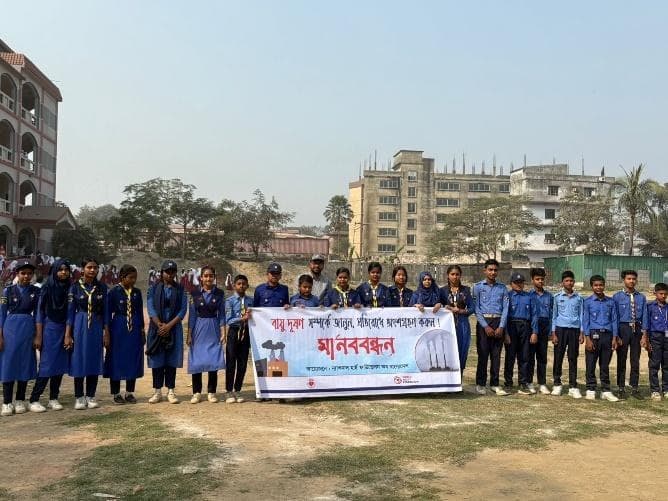
More than 100 scout and girl guide volunteers from the five schools attended orientation sessions on the health effects of air pollution and how to talk to their peers about it, using the presentation and the video. They then helped run the campaigns in their own schools.
04
Run the campaigns
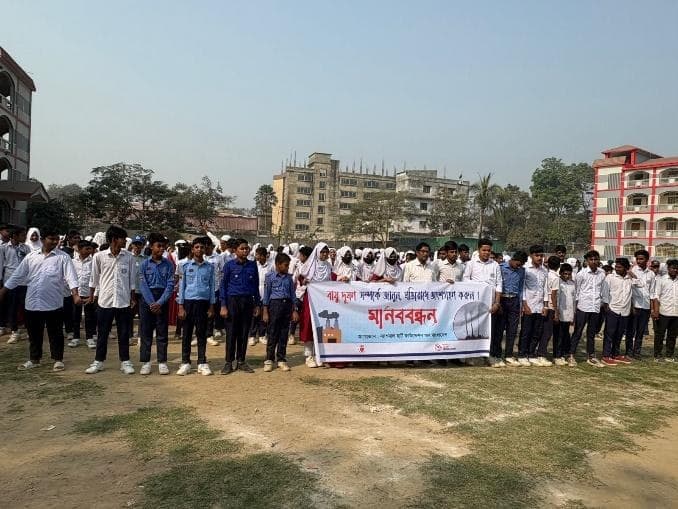
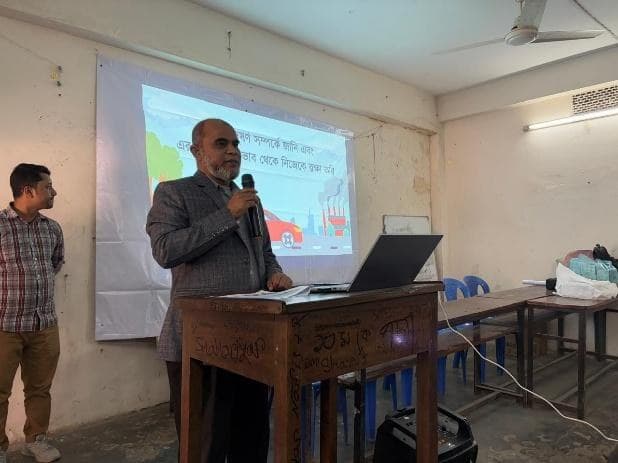
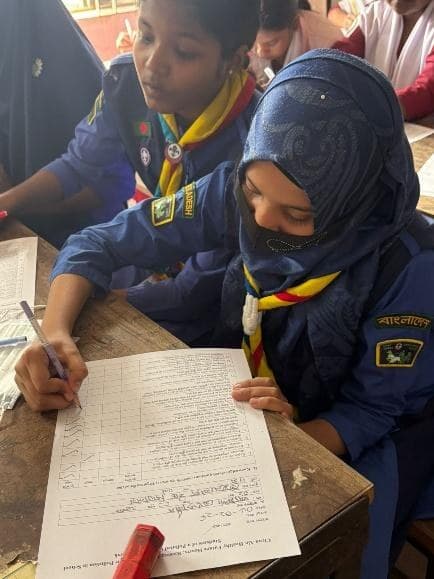
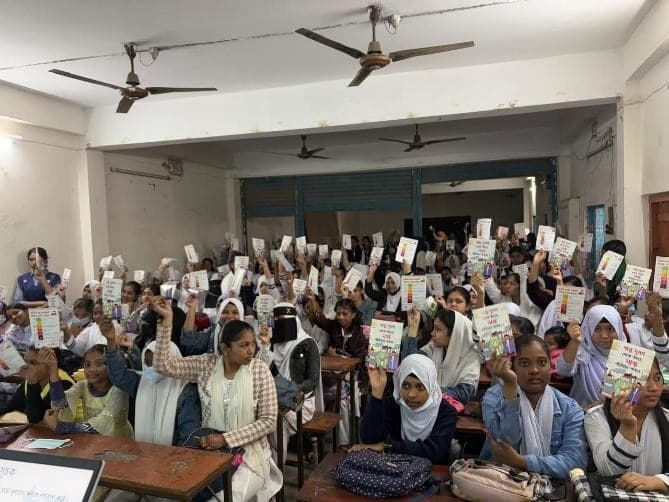
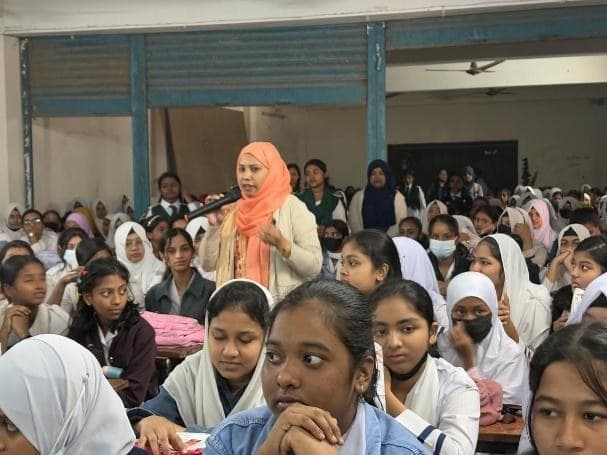
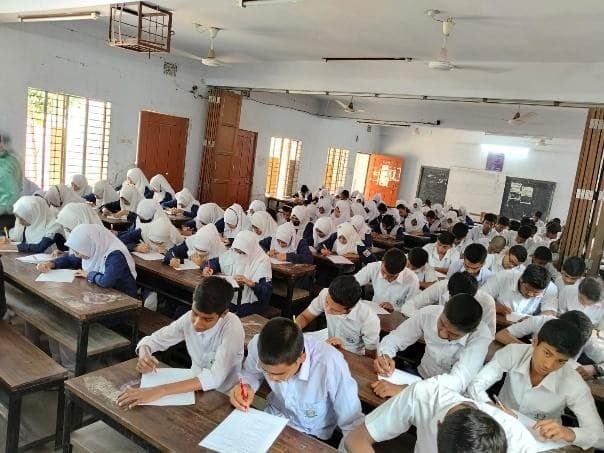
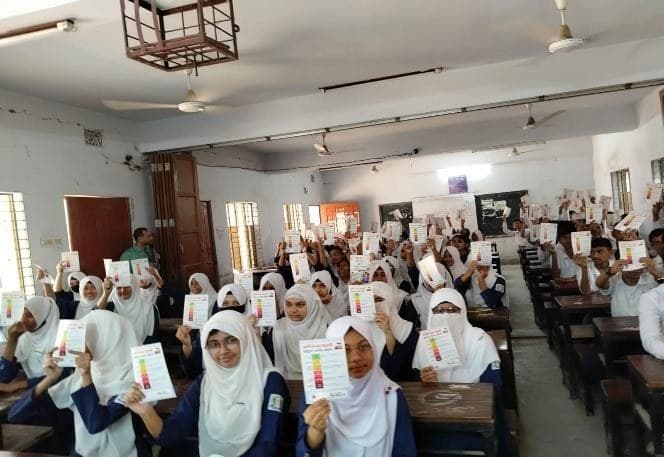
In each school, about 80 students took a short test, listened to the presentation, watched the video and took the test again. Masks and leaflets went to students and teachers, with an explanation of how to identify polluted air, why it harms the heart and lungs, how to check the Air Quality Index, and when a mask helps.
The five schools
- Tetul Jhora High School
- Agrani High School, Savar
- Savar Girls High School
- Mirpur Mofid-e-am School and College
- Mohammad Ali Yeakub Ali School and College
Beyond the classroom
Photographs and templates from the campaigns, and students' own voices on the health hazards of air pollution, were posted on the department's Facebook page throughout the project. A situation analysis and a fact sheet on air pollution in Bangladesh were prepared for a stakeholders' meeting with senior officials and policymakers.
03What students learned
Pollutants, the index, and when to wear a mask
Students took the same short test before and after each session. The campaign increased their awareness of air pollution: afterwards they could name the common pollutants, explain the health effects, read the Air Quality Index and describe practical ways to reduce their exposure.
- 01Which pollutants are in Dhaka's air, and why PM2.5 is the one that matters most
- 02How polluted air harms the heart and lungs, and why children are more vulnerable than adults
- 03What the Air Quality Index means and how to check it each day
- 04When wearing a mask protects them, and how to protect their families
04What it means
Put environmental health in the curriculum, and let young people lead
The project points to two things. Environmental health education belongs in school curricula, and youth-led awareness works: engaging students and scouts in air pollution prevention can foster long-term behaviour change, in ways a one-off lecture cannot.
It also shows the value of telling policymakers where the gaps are at community level. Evidence gathered in schools and neighbourhoods supports the design of targeted interventions and national strategies to reduce children's exposure to polluted air.
Supported by

World Heart Federation, Geneva
05Project team
Who ran the campaigns
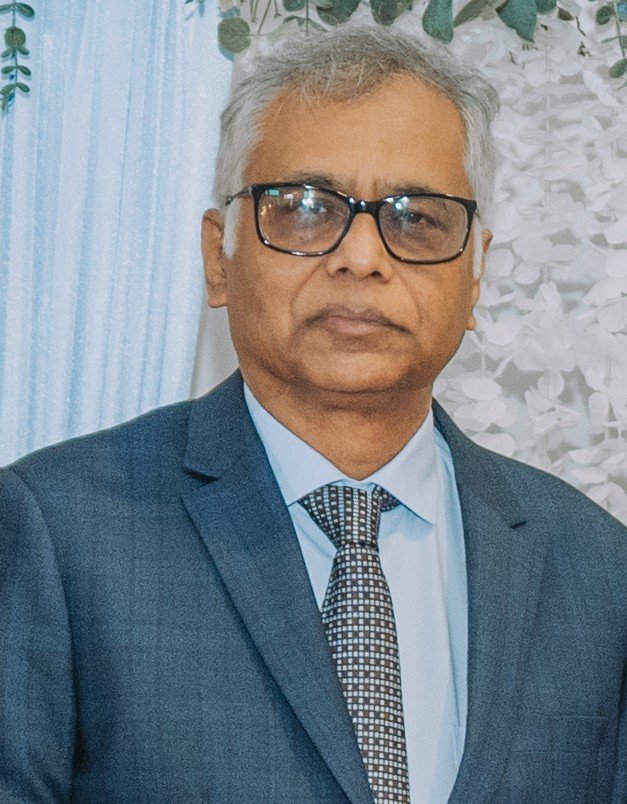
Prof. Sohel Reza Choudhury
Program Director
Professor & Head Department of Epidemiology and Research

Dr. Jubaida Akhtar
Research Medical Officer

Dr. Aliva Haque
Project team
Medical Officer

Abu Jafor
Project team
Senior Communication Officer (Tobacco Control Program)
- Dr. Abdullah Al Mamun
- Project Manager
- Mohammad Wali Noman
- Project team
- Ornee Sharif
- Project team
06Related
Prevention that starts at school.
Air pollution is one of several risks the department works on before disease develops, alongside tobacco, salt and hypertension. If your school, scout group or organisation would like to run a clean air session, write to the department.