
ProgramsSHASTO-2 baseline survey
Can the primary care system manage hypertension and diabetes? A baseline for three districts.
A mixed-methods survey of NCD services across district hospitals, upazila health complexes and community clinics in Narsingdi, Cumilla and Cox's Bazar. Despite real progress, gaps remain in trained staff, equipment, medicine supply, referral and digital records. The findings set the benchmarks for JICA's SHASTO-2 project.
Conducted by the Department of Epidemiology and Research with the Centre for Global Health Research, Diabetic Association of Bangladesh, for the Japan International Cooperation Agency, December 2023 to March 2024.
- 792
- Community clinics surveyed, 260 of them by visit
- 23
- Upazila health complexes, plus 3 district hospitals
- 26
- Upazilas in three districts
- 43
- Interviews and group discussions with policymakers, managers and providers
01Why a baseline
An NCD model on paper, tested at the facility door
Non-communicable diseases cause 61% of deaths in Bangladesh. A quarter of adults have hypertension, nearly one in ten has diabetes, and three quarters carry two or more modifiable risk factors. The government's answer, under the 4th Health, Population and Nutrition Sector Program, is an NCD management model adapted from the WHO package for primary care: NCD corners in upazila health complexes that screen, diagnose and treat hypertension and diabetes. By May 2024 the model had reached 364 upazila health complexes, with support from development partners including JICA.
JICA has worked with the government since 2017, through the SHASTO project, to strengthen NCD management in Narsingdi and Cox's Bazar. SHASTO-2 adds Cumilla and aims to optimise the model, strengthen quality improvement committees and work improvement teams in hospitals, and revive the district and upazila CORE teams that drive community prevention.
Before the project could measure progress, it needed to know where things stood. This survey answers three questions: what NCD services are available and used at each tier of the system, how quality improvement is being monitored, and what the CORE teams and community groups are actually doing.
02How the survey was done
Every tier, counted and questioned
Quantitative data on facilities and services were paired with the accounts of the people who run them, then brought together so that numbers and explanations could be read side by side.
01
Facility survey
Trained enumerators visited all 3 district hospitals, all 23 upazila health complexes and 260 community clinics with structured checklists, observing NCD corners, equipment, medicines, records and staffing. The remaining 532 community clinics reported through an online form.
02
Records and desk review
Approved CORE team lists, quality improvement documents, service registers and secondary data on NCD service use over the previous twelve months, alongside published literature, policies, guidelines and training manuals.
03
Interviews and groups
Six key informant interviews with central policymakers, 29 in-depth interviews with civil surgeons, hospital superintendents and upazila health officers, and eight focus group discussions with health workers. Transcribed in Bangla, coded, and analysed thematically.
03What the survey found
Six gaps between the model and the corner
Efforts by the government and JICA have put NCD corners in place. Keeping them functional, with the people, tools, medicines and records they need, is where the system is still falling short.
Staff
Trained providers are short at NCD corners and community clinics, most of all in Cumilla. Key informants asked for task-sharing so that non-physician staff, including SACMOs, can help manage hypertension and diabetes.
Equipment
Facilities lacked basics for a working NCD corner: digital blood pressure machines, glucometers and their strips and needles, and up-to-date tablets for records. Screening in the community suffered as a result.
Medicines
Stock-outs at NCD corners and community clinics led to missed visits and patients lost to follow-up. The report calls for twice-yearly facility audits to keep protocol medicines in supply.
Records
The digital registration app in use at NCD corners does not talk to DHIS2, so data on lost-to-follow-up and medicine stock go missing. Registers at upazila and community level were not organised by condition.
Referral
There is no organised path from community clinic to upazila and back. Informants asked for a referral guideline, referral slips, a help desk at upazila complexes, and text message reminders, which have cut missed visits elsewhere in Bangladesh.
Community
Where district and upazila CORE teams were active, in Narsingdi and Cox's Bazar, community clinics and their community groups ran more awareness and prevention work than in Cumilla, where the project is newer.
Quality improvement teams in place
JICA has helped establish quality improvement committees and work improvement teams in project hospitals. Where they exist, they assess care and take corrective action using the 5S standards and monitoring tools. Elsewhere, facilities rely on their own management.
| District | Upazila health complexes with QIC and WIT |
|---|---|
| Narsingdi | 2 of 6 |
| Cox's Bazar | 2 of 3 |
| Cumilla | 4 of 16 |
What works
The CORE team approach. In Narsingdi and Cox's Bazar, where JICA has worked for more than five years, district and upazila CORE teams have measurably improved service delivery and reporting at community clinics, and the community groups attached to those clinics run more health education: on tobacco, salt and sugar, vegetables and a balanced diet, healthy weight, and regular blood pressure and blood sugar checks.
Some NCD corners also counsel patients through group discussions and educational videos in the waiting room, despite crowded conditions.
04What should change
Six policy recommendations, and what facility managers can do now
For policy
- 01Equip every NCD corner and laboratory with the essential equipment and logistics it needs to run
- 02Upgrade the digital tools at NCD corners so they work with DHIS2 and can track hypertension and diabetes care
- 03Set up an upward and downward referral system, with a referral guideline and referral slips, so follow-up continues after a patient is screened
- 04Have NCDC integrate NCD corners into the standard upazila health complex structure so services continue
- 05Begin universal screening of adults at community clinics, led by the community-based health care operational plan and NCDC
- 06Advocate for an uninterrupted supply of protocol medicines to facilities, with JICA and other development partners
For facility managers
- Redistribute providers so NCD corners are properly staffed, with assigned medical officers, nurses and SACMOs present
- Train existing and new staff on the national hypertension and diabetes protocols
- Add NCD indicators to routine monitoring: control rate, uncontrolled rate, missed visits, lost to follow-up, registrations
- Provide counselling and health education at NCD corners and community clinics, including group sessions
- Reform and activate quality improvement committees, work improvement teams and CORE teams, and make the required monitoring visits
- Make community clinics and their community groups more active through supervision and more awareness programmes
05Team and partners
Who did the survey
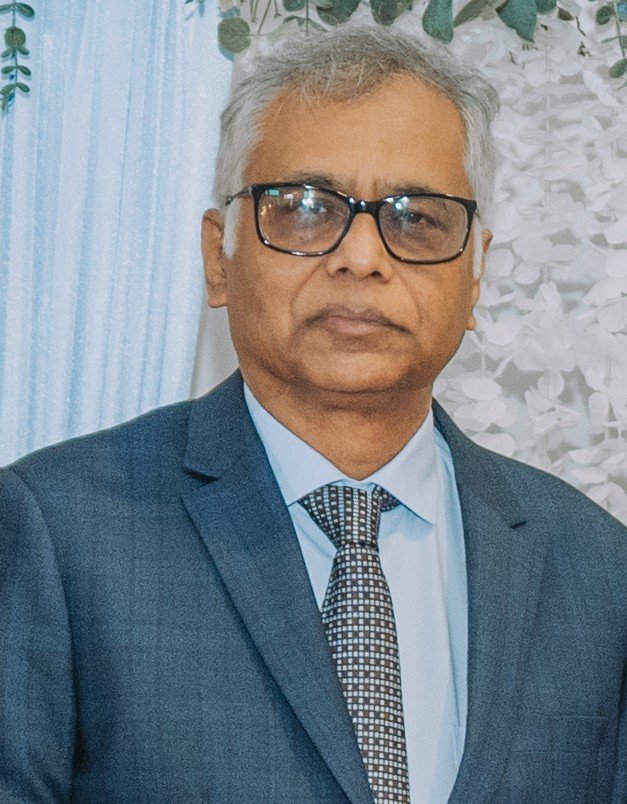
Prof. Sohel Reza Choudhury
Principal Investigator

Dr Shamim Jubayer
Co-Investigator

Dr. Jubaida Akhtar
Study Coordinator

Md. Noor Nabi Sayem
Data analyst
- Dr. Bishwajit Bhowmik
- Co-Principal InvestigatorCentre for Global Health Research, Diabetic Association of Bangladesh
- Dr. Ahmad Khairul Abrar
- Co-InvestigatorDepartment of Epidemiology and Research, NHFB
- Rie Ozaki
- Chief Advisor, SHASTO-2 projectJICA
With
- JICA
Japan International Cooperation Agency, funder and technical partner of SHASTO-2

Non-Communicable Disease Control Programme, DGHS

Directorate General of Health Services, Ministry of Health and Family Welfare
- BADAS
Centre for Global Health Research, Diabetic Association of Bangladesh
06Related
The same corners, seen from another program.
The NCD corners this survey assessed are where the Bangladesh Hypertension Control Initiative runs its protocol-based care, and where the department's tobacco quitline finds its patients. The three programs share the same aim: make primary care the place where chronic disease is caught and controlled.