
World Heart Day · 29 and 30 September 2026
World Heart Day2026
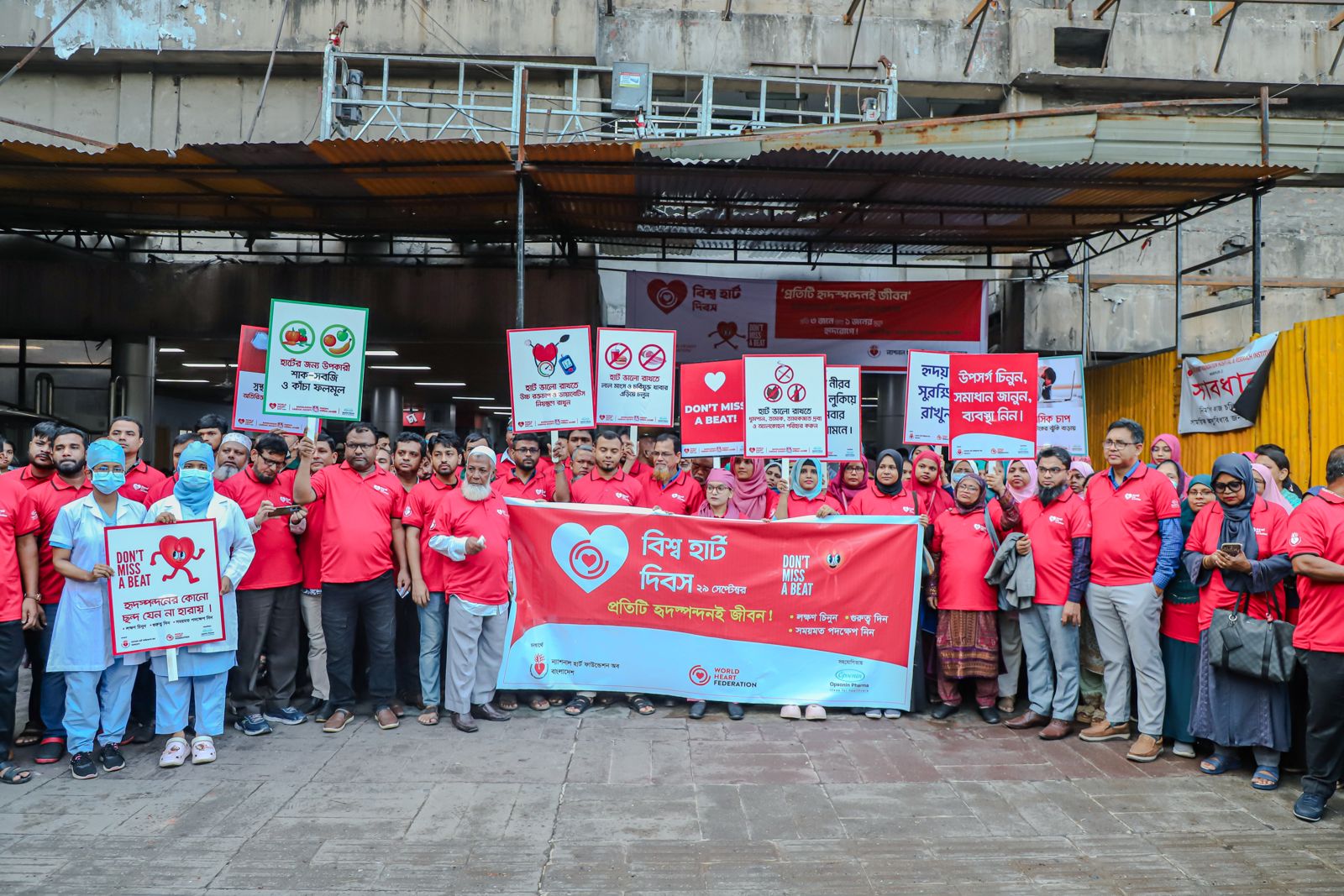
The National Heart Foundation of Bangladesh marked World Heart Day 2026, “Every heartbeat is life”, with a rally of several hundred people in Mirpur on 29 September, a public seminar with the Minister of Health and Family Welfare as chief guest on 30 September, free heart camps, awareness posters and leaflets, and programmes by its 45 affiliated bodies across the country.
Theme: Don't Miss a Beat: প্রতিটি হৃদ্স্পন্দনই জীবন (Every heartbeat is life)
The programme
The World Heart Federation's campaign continues with “Heart disease can hide in plain sight: Don't miss a beat”. The National Heart Foundation of Bangladesh carried it in Bangla as “প্রতিটি হৃদ্স্পন্দনই জীবন”.
- 01
Rally, 29 September
A colourful rally set off at 6:30 in the morning from in front of the national cricket stadium in Mirpur, went round the main road and ended in front of the National Heart Foundation Hospital & Research Institute. Several hundred people took part, led by a brass band and a horse-drawn carriage carrying the campaign banner.
- 02
Public seminar, 30 September
The public seminar “Every heartbeat is life”, held on Wednesday morning in the Institute's auditorium, focused on preventing heart disease, reducing risk, timely treatment and tobacco control. It was chaired by Prof. Dr. Khandaker Abdul Awal Rizvi, President of the National Heart Foundation of Bangladesh. The chief guest was Sardar Md. Sakhawat Hossain, Minister of Health and Family Welfare; the special guests were Sharaf Uddin Ahmed Chowdhury, Secretary, Ministry of Textiles and Jute, and Prof. Dr. Nazmul Hossain, Director General, Directorate General of Health Education.
- 03
Welcome address
Prof. Fazila-tun-Nessa Malik, Secretary General of the Foundation, said that more than 20.5 million people die of cardiovascular disease worldwide every year, yet according to the World Heart Federation about 80 per cent of it is preventable. The Foundation works all year on prevention through research, public awareness and advocacy.
- 04
Keynote: three proposals
Prof. Dr. Sohel Reza Choudhury, Head of the Department of Epidemiology and Research, said that preventing heart disease depends not only on personal awareness but on effective public health policy and stronger primary care. He put forward three proposals: effective tobacco control, including prompt rules under the Tobacco Control Act 2026; a budget for blood pressure and diabetes control in primary health care; and lower salt intake in line with World Health Organization recommendations.
- 05
The guests
Prof. Dr. Nazmul Hossain stressed identifying risk early: high blood pressure, diabetes, unhealthy diet, physical inactivity and tobacco use. Sharaf Uddin Ahmed Chowdhury called for tobacco-free workplaces and effective control of e-cigarettes and other new nicotine products. The Minister said the government would keep making heart disease prevention and care more accessible, with emphasis on awareness, tobacco control, healthy living and early detection.
- 06
From the chair
Prof. Dr. Khandaker Abdul Awal Rizvi said that treatment alone is not enough: government, doctors, researchers, the media, civil society and the public must work together, especially to detect heart disease risk and ensure treatment in primary care. Joint Secretary General Nowshad Hossain gave the vote of thanks.
- 07
Free heart camps and awareness
Free heart check-up camps were held at Mirpur-2 on 29 and 30 September, from 8:00 to 13:00, and at Darus Salam on 29 September, and awareness posters and leaflets were distributed.
- 08
Across Bangladesh
Outside Dhaka, the Foundation's 45 affiliated bodies marked the day with their own programmes.
In pictures
Rally
14 photosPublic seminar
8 photosFree heart camps
1 photoIn the media
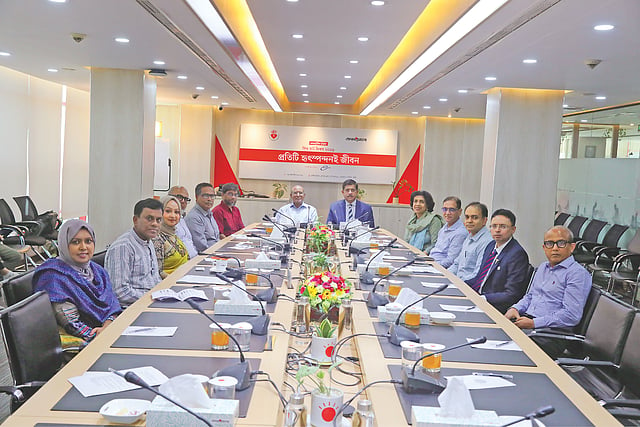 Prothom Alo · 29 Sep 2026Roundtable: “World Heart Day 2026: Every heartbeat is life”, organised by the National Heart Foundation of Bangladesh and Prothom AloRead on Prothom Alo ↗
 Daily Adin · 30 Sep 2026Primary angioplasty, the most advanced treatment for a heart attack: from an article by Prof. Fazila-tun-Nessa MalikRead on Daily Adin ↗