
ProgramsTobacco quitline pilot
A phone call, four follow-ups, and 210 people who quit.
Bangladesh's first tobacco quitline: a telephone service that finds tobacco users, counsels them, and stays with them through their quit attempt. Piloted nationwide by the department with technical support from the World Health Organization.
A three-month pilot, October to December 2025, under a WHO agreement for performance of work (RFP/BAN/2025/017). Counsellors reached callers on 09613 55 33 44.
- 11,155
- Proactive calls made by the counsellors
- 1,372
- Tobacco users enrolled for counselling
- 210
- Quit tobacco during the pilot
- 310
- Upazila health complexes involved
01Why a quitline
Most tobacco users want to quit. Almost none get help.
More than a third of Bangladeshi adults use tobacco, smoked or smokeless. Two thirds of smokers and half of smokeless users say they want to quit, and many try each year. But support is scarce: brief advice at primary care facilities, no national quitline, and little access to medicines that help.
Quitlines are a proven, low-cost way to reach large numbers of people. They are free, confidential and remote, so cost, distance and stigma stop fewer people from asking for help. Article 14 of the WHO Framework Convention on Tobacco Control, which Bangladesh ratified in 2004, asks member states to provide exactly this.
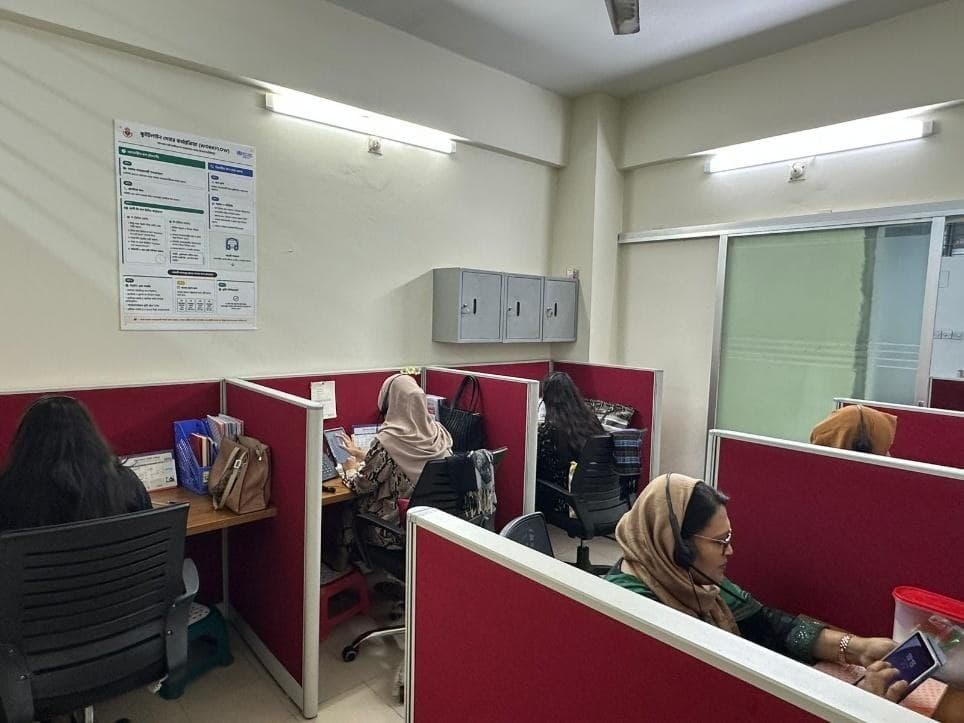
The department already runs a call centre for the hypertension initiative, with counsellors who are used to following up patients by phone. That made it possible to pilot a quitline quickly: a dedicated number, a customised app to run the service, and four counsellors trained on WHO-recommended methods.
02How it worked
From a WHO protocol to a working line in three weeks
01
Adapt the WHO protocol
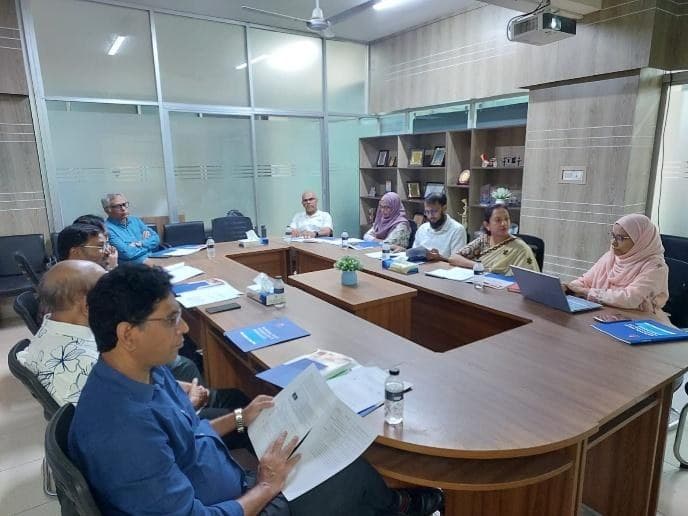
Two protocol adaptation meetings at NHFH&RI on 13 and 16 October 2025 reviewed the draft quitline protocol, five text messages, a poster and a leaflet, followed by a consultation with experts and policymakers at the National Tobacco Control Cell on 26 October.
02
Train four counsellors
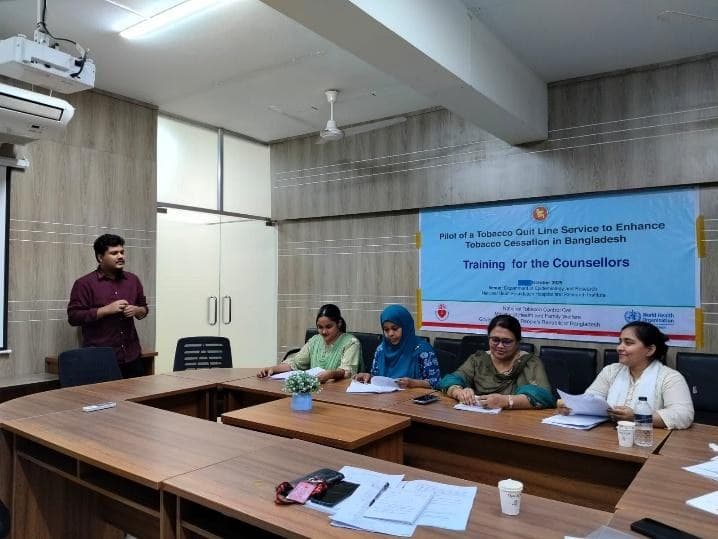
A five-day training from 21 to 25 October 2025, led by the project team and three resource persons, followed by a mock run of the whole service to test the system and the workflow before launch.
03
Call, enrol, follow up
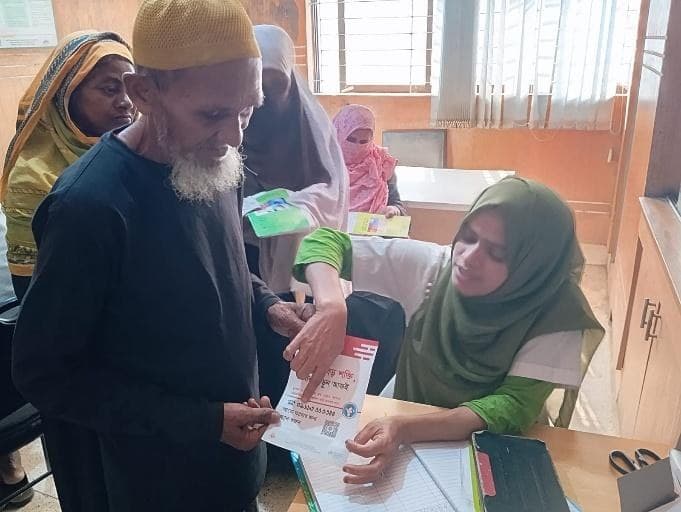
The line ran seven days a week from 9 a.m. to 4 p.m. Counsellors called tobacco users from the NCD database of upazila health complexes, screened them, and enrolled those who consented. Each participant then received four structured follow-up calls over six weeks, with a motivational text message after every call.
04
Tell people it exists
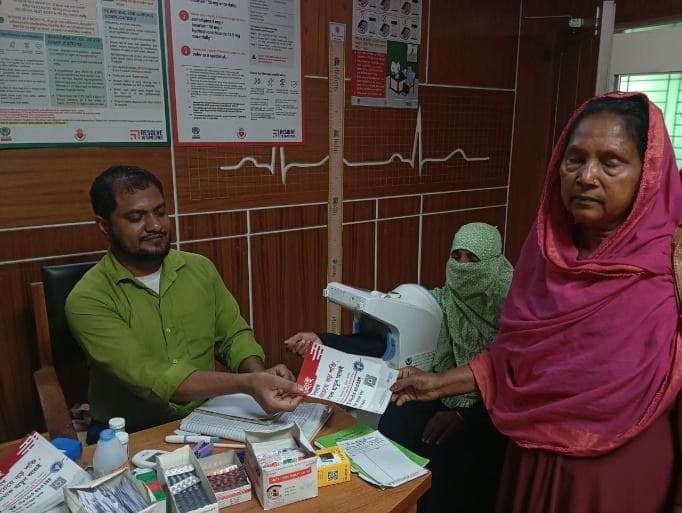
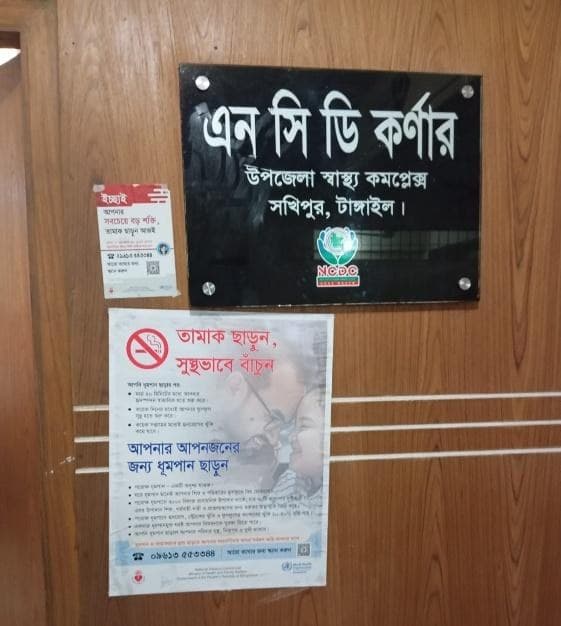
Posters went up at NCD corners in upazila health complexes and leaflets were handed to tobacco users there. The number was promoted on Facebook, and every enrolled participant was sent the department's quit-support app. Every reactive caller had heard of the line on social media.
Quality was checked throughout: every counselling call was recorded and reviewed periodically by a supervisor, and the app tracked each participant's progress in real time.
03What happened
Who the line reached, and who quit
The counsellors set out to make 10,000 first calls. They made 11,155. Here is what happened to those calls, and who the people on the other end turned out to be.
| Step | People |
|---|---|
| Proactive calls made | 11,155 |
| Screened for eligibility | 4,743 |
| Enrolled from proactive calls | 1,358 |
| Enrolled from inbound calls | 14 |
| Total enrolled | 1,372 |
| Quit tobacco | 210 |
Who quit
Two thirds of those who quit were smokeless tobacco users (140 people), 60 were smokers and 10 used both. That mirrors who enrolled: the line reached far more smokeless users than smokers, which is unusual for cessation services and matters in a country where smokeless tobacco is the more common habit.
Quitting was self-reported by participants during follow-up calls.
Who enrolled
60.9%
of enrolled participants were men.
83%
were aged 45 or older. Only nine of the 1,372 were under 30.
80%+
had less than secondary education; a third had never been to school. The proactive approach reached people other services rarely do.
60.9%
used smokeless tobacco, 32.3% smoked, and 6.7% used both.
51%
said at enrolment that they had no confidence they could quit.
46%
were still in touch by the fourth follow-up call, down from 96% after the first.
04What we learned
What got in the way, and what a national line needs
The pilot's purpose was to produce recommendations the government could act on. It did: the Government of Bangladesh is now developing a country-specific national quitline guideline, and the National Tobacco Control Cell is working to set up a toll-free national quitline.
Challenges
- Many callers wanted general health information, or asked about free medicines at upazila health complexes, rather than help to quit
- The NCD database listed some people as tobacco users who were not
- Rural participants often left their phones at home, or had no phone of their own
- A few participants declined follow-up calls despite consenting at first contact
- Two months of telephone counselling was too short for many people to quit and stay quit
Recommendations
- 01Make the quitline a core part of the national tobacco cessation strategy, with government funding secured in health budgets
- 02Promote it nationally, making clear that it is for tobacco cessation
- 03Run the line 24 hours a day, so that working people can call
- 04Extend the counselling period and support people through relapse
- 05Train clinicians, nurses and community health workers to identify tobacco users and refer them as part of routine care, and link the line to hospitals and clinics
- 06Give counsellors certified short courses in cessation counselling
- 07Clean and update the upazila NCD database so phone numbers work and tobacco status is accurate
05Team and partners
Who ran the pilot
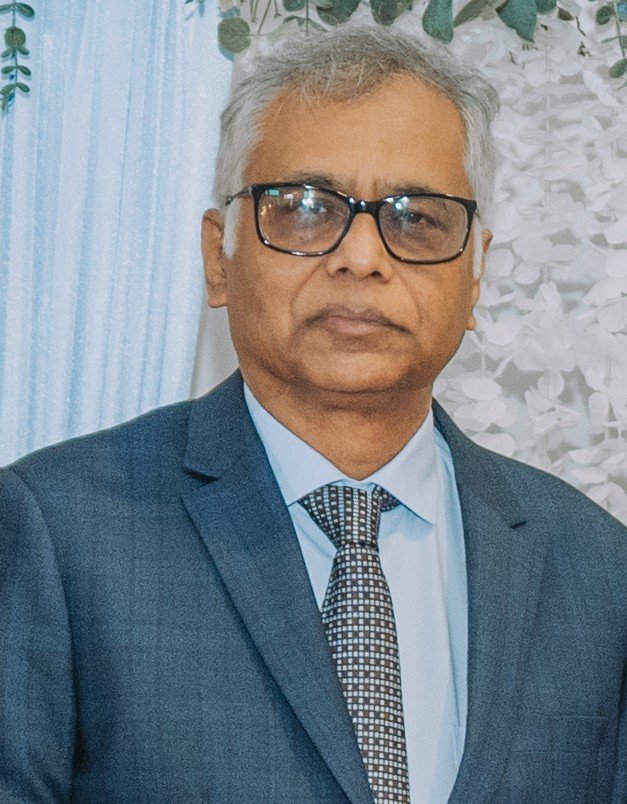
Prof. Sohel Reza Choudhury
Principal Investigator
Head, Department of Epidemiology and Research

Dr Shamim Jubayer
Evaluator
Department of Epidemiology and Research

Dr. Jubaida Akhtar
Supervisor
Research Medical Officer
- Muhtamim Fuwad Nahid
- IT expert, Department of Epidemiology and Research
- Dr Kh Md Watin Alam
- Technical Advisor, WHO Bangladesh
- Dr ASM Ishtiak
- Program Officer, WHO Bangladesh
Government and non-government stakeholders took part in the protocol consultations and the pilot: National Tobacco Control Cell, Campaign for Tobacco-Free Kids, Vital Strategies, Bangladesh Medical University, Bangladesh Center for Communication Programs.
06Related
The line the nurses can now refer to.
The quitline grew out of the department's study of cessation counselling by nurses, which found that nurses want to help patients quit but have nowhere to send them. Together with the hospital's cessation clinic and the quit-support app, it is part of one cessation pathway.